
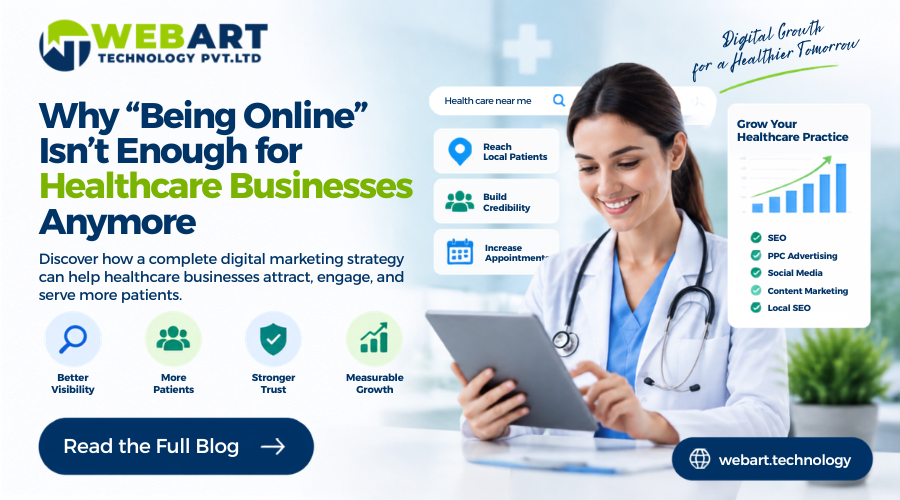

Healthcare marketing has changed. Patients no longer rely only on referrals, newspaper ads, or a sign outside a medical office when choosing a provider. Today, they search online, compare providers, read reviews, check services, and often decide who to contact before ever stepping through the front door. PPC advertising in healthcare USA can also help healthcare businesses appear in front of patients actively searching for specific services, locations, or providers.
That makes a patient-focused digital marketing strategy more important than ever for healthcare businesses in the USA.
But there is one important difference between healthcare marketing and selling a pair of sneakers: patients are making decisions that can directly affect their health and well-being. Your marketing needs to be helpful, accurate, trustworthy, and easy to understand.
This is where an experienced digital marketing company can help healthcare businesses build visibility while keeping the patient at the center of the strategy.
What Is a Patient-Focused Healthcare Marketing Strategy?
A patient-focused strategy is built around what patients need at each stage of their decision-making process.
Instead of asking, “How can we promote this service?” a healthcare business should ask:
- What are patients searching for?
- What questions do they have?
- What information makes them feel confident?
- How easy is it to contact us?
- Can patients find us in local search?
- Does our website explain our services clearly?
- What happens after someone submits an inquiry?
This approach combines healthcare SEO, local SEO, content marketing, paid search, reputation management, conversion optimization, and analytics.
The goal is simple: make it easier for the right patient to find, understand, trust, and contact your healthcare business.
Start With the Patient, Not the Platform
One common mistake is jumping straight into Google Ads, social media, or SEO without understanding the audience.
A healthcare provider may serve several different patient groups. For example, a dental practice could attract families, emergency patients, adults looking for cosmetic procedures, and patients searching for affordable treatment.
Each group has different concerns.
Someone searching “emergency dentist near me” probably wants immediate information. Someone researching dental implants may spend weeks comparing providers.
Your strategy should reflect these differences.
Build Patient Personas
For each major service, identify:
- Patient age group
- Location
- Common health concerns
- Search behavior
- Questions they ask
- Services they need
- Common objections
- Preferred communication method
This gives your marketing team a clearer direction for SEO content, landing pages, paid campaigns, and social media.
Build a Healthcare Website That Answers Real Questions
Your website is often the first interaction a potential patient has with your healthcare business.
If the website looks outdated, loads slowly, hides contact information, or uses confusing medical language, patients may simply leave.
A strong healthcare website should include:
- Clear service pages
- Location-specific information
- Provider credentials
- Accurate contact details
- Easy appointment options
- Patient FAQs
- Reviews and testimonials where appropriate
- Insurance or payment information
- Mobile-friendly design
- Fast page speed
- Secure forms
- Helpful educational content
For example, service and educational pages can benefit from clearly identifying qualified healthcare professionals, reviewing medical content appropriately, and providing accurate information with reliable sources.
Use Healthcare SEO to Capture Patient Searches
Search engine optimization helps healthcare businesses appear when potential patients are actively looking for information or services.
Instead of targeting only broad keywords such as “doctor” or “dentist,” create a keyword strategy around search intent.
For example:
| Search Intent | Example Keyword | Recommended Content |
| Informational | symptoms of gum disease | Educational blog |
| Service | dental implants in Miami | Service page |
| Local | dentist near me | Local SEO / Google Business Profile |
| Urgent | emergency dentist Miami | Emergency service page |
| Comparison | dental implant options | Comparison guide |
| Transactional | schedule dentist appointment | Conversion-focused landing page |
This creates a stronger connection between what patients search for and what your healthcare business provides.
Don’t Forget Local SEO
For healthcare providers, local search can be extremely valuable.
Optimize your Google Business Profile and make sure your name, address, phone number, services, hours, and website information are consistent across relevant platforms.
Location pages can also help healthcare businesses target searches such as:
- Primary care doctor in Dallas
- Family dentist in San Diego
- Physical therapy clinic in Austin
- Urgent care near Houston
- Pediatric dentist in Phoenix
The more relevant the page is to the patient’s actual search, the better the experience.
Create Content That Helps Patients Make Decisions
Healthcare content should not feel like a sales brochure.
Patients have questions. Lots of them.
They may want to know:
- When should I see a doctor?
- What happens during this treatment?
- Is this procedure painful?
- How long does recovery take?
- What does the treatment cost?
- Does insurance cover it?
- What should I bring to my appointment?
- When is treatment considered urgent?
A healthcare content strategy should answer these questions clearly.
Blog posts, FAQs, treatment guides, comparison articles, provider bios, videos, and educational resources can all support the patient’s research journey.
Good content also gives search engines more context about your expertise and services.
Read More: How SaaS Companies in the USA Can Use AI Automation to Reduce Operational Costs
Invest in PPC Advertising in Healthcare USA
SEO is valuable, but it takes time to build organic visibility. Paid search can help healthcare businesses reach people who are already searching for relevant services.
PPC advertising in healthcare USA should be handled carefully because healthcare advertising involves stricter requirements than many other industries.
Campaigns should focus on relevant search intent rather than simply spending more money.
For example, a dental practice might create separate campaigns for:
- Emergency dental services
- Dental implants
- Cosmetic dentistry
- Family dentistry
- Teeth whitening
Each campaign should lead to a relevant landing page instead of sending every visitor to the homepage.
This improves message matching and gives patients the information they need without making them hunt around the website.
Example Healthcare Marketing Growth Graph
A balanced strategy often works better over time than depending entirely on one channel.
Visibility
|
| █████████
| █████████████
| ███████████████
| █████████████
| ███████████
| █████████
|██████
+—————————————–
Month 1 2 3 4 5 6
SEO + Content + Local + PPC
The important point is that SEO and content can build long-term visibility while paid search can provide faster opportunities to reach high-intent users.
Use Digital Marketing Services in USA to Connect the Channels
Healthcare marketing works best when individual channels are not operating in separate corners.
A digital marketing company can coordinate:
- Healthcare SEO
- Local SEO
- PPC management
- Content marketing
- Social media marketing
- Reputation management
- Conversion rate optimization
- Analytics and reporting
- Website optimization
- Online reputation monitoring
For example, PPC data can reveal which search terms generate quality inquiries. Those insights can then help guide SEO content.
Similarly, SEO data can show which services receive strong organic interest, helping the business identify opportunities for paid campaigns.
That is much more useful than treating SEO, PPC, and social media as completely separate activities.
Build Trust Through Online Reviews and Reputation
Patients want reassurance before choosing a healthcare provider.
Online reviews can influence that decision.
Healthcare businesses should have a consistent process for requesting reviews from appropriate patients while following applicable privacy, platform, and healthcare regulations.
Monitor reviews regularly and respond professionally.
A simple “Thank you for sharing your experience” can go a long way when handled appropriately.
Negative reviews should not be ignored either. Responding calmly and professionally can demonstrate that the practice takes patient experiences seriously.
Never disclose private patient information in a public response.
Make Every Patient Action Easy
Getting website traffic is only half the job.
What happens when someone arrives?
The next step should be obvious.
Depending on the healthcare business, useful calls to action may include:
- Book an appointment
- Call the office
- Request information
- Find a location
- Verify insurance
- Contact the care team
Forms should be short and easy to complete. Phone numbers should be easy to find on mobile devices.
A patient shouldn’t need a treasure map to figure out how to contact your office.
Track the Metrics That Actually Matter
Healthcare marketing reports should go beyond impressions and clicks.
Track metrics such as:
| Area | Important Metrics |
| SEO | Organic traffic, rankings, impressions, clicks |
| Local SEO | Profile views, calls, direction requests |
| PPC | Clicks, cost per click, conversions, cost per conversion |
| Website | Engagement, landing-page performance, form submissions |
| Content | Traffic, engagement, assisted conversions |
| Reputation | Review volume, rating trends, response activity |
The exact KPIs will depend on the healthcare business and its goals.
More importantly, connect marketing activity with meaningful patient actions wherever privacy and tracking requirements allow.
Why Healthcare Businesses Should Work With a Digital Marketing Company
Managing healthcare marketing internally can become difficult very quickly.
There is SEO research to complete, content to produce, Google Business Profile activity to manage, paid campaigns to monitor, website issues to fix, analytics to review, and compliance considerations to keep in mind.
Specialized digital marketing services in USA can bring these activities together under one strategy.
The right partner can help a healthcare business:
- Understand its target patients.
- Identify valuable search opportunities.
- Improve website visibility.
- Create useful healthcare content.
- Manage PPC advertising in healthcare USA campaigns.
- Strengthen local search presence.
- Improve online reputation.
- Track performance and refine campaigns.
The goal isn’t to chase every marketing trend. It is to create a system that consistently helps the right patients find the right information at the right time.
Final Thoughts
A successful healthcare digital marketing strategy starts with a simple idea: patients come first.
Healthcare businesses in the USA need more than traffic. They need visibility, credibility, useful information, strong local presence, and an easy path from search to appointment.
When SEO, content marketing, local SEO, reputation management, website optimization, and PPC advertising in healthcare USA work together, healthcare providers can create a stronger digital presence and compete more effectively in their markets.
This is where WebArt Technology can help. With a patient-focused approach to SEO, paid marketing, content, website optimization, and digital strategy, WebArt Technology helps healthcare businesses build a digital presence designed around real patient needs—not just clicks and impressions.
The best healthcare marketing doesn’t feel like advertising.
It feels like finding the answer you were looking for.
Frequently Asked Questions
1. Why is digital marketing important for healthcare businesses?
Digital marketing helps healthcare businesses reach patients when they are actively searching for medical services, treatment information, providers, and local healthcare options.
2. How does PPC advertising help healthcare businesses?
PPC advertising can place healthcare services in front of people with high search intent. Campaigns can be organized by service, location, and patient needs to make advertising more relevant.
3. What is the role of SEO in healthcare marketing?
Healthcare SEO helps improve a website’s visibility in organic search results. It can support service pages, educational content, local searches, and long-term online visibility.
4. How can healthcare businesses improve local search visibility?
Healthcare businesses can optimize their Google Business Profile, maintain consistent business information, create relevant location pages, earn appropriate reviews, and develop locally relevant content.
5. How long does healthcare digital marketing take to produce results?
The timeline depends on competition, website condition, location, services, content quality, and the marketing channels being used. PPC can produce visibility more quickly, while SEO generally requires consistent work over a longer period.